
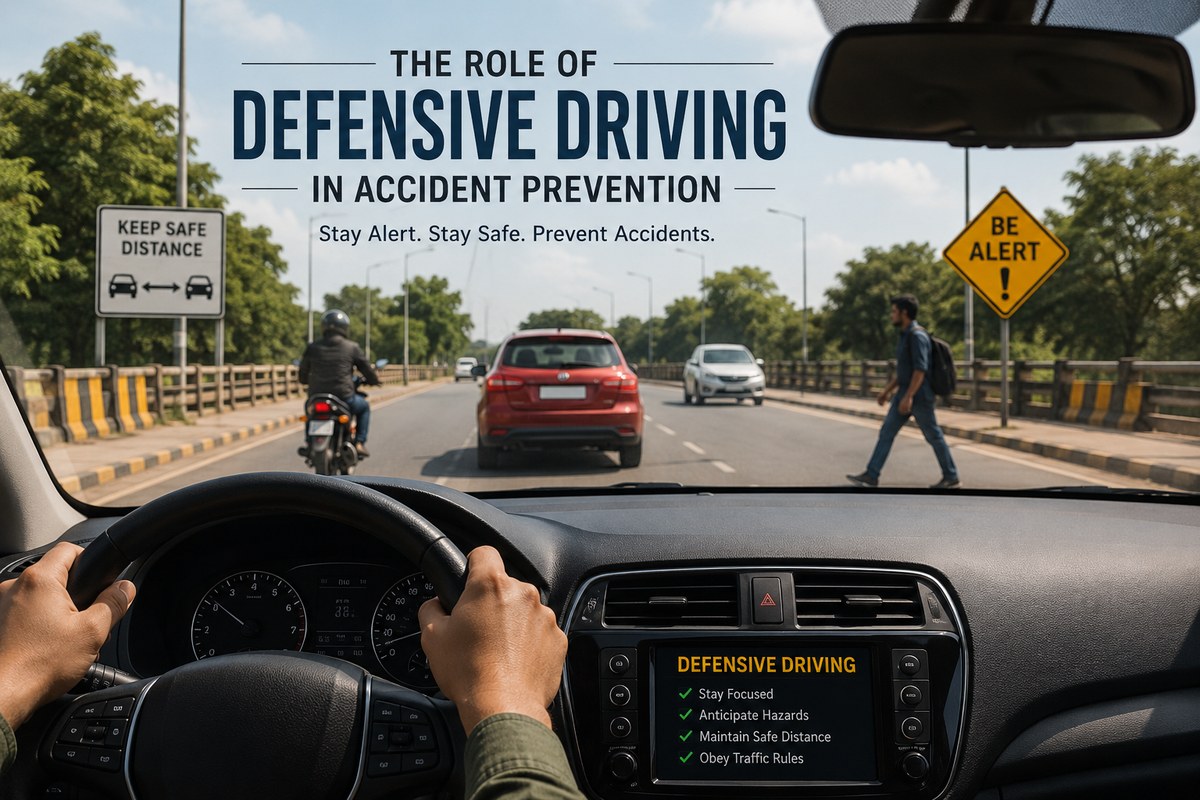
Why Defensive Driving Helps Prevent Accidents
Accidents can develop from a combination of speed, distraction, poor observation, insufficient following distance and unexpected actions by other road users. Defensive driving helps drivers recognise these risks and respond more safely.
The goal is not only to react to danger, but to create enough time, space and awareness to reduce the chance of a collision in the first place.
Stay Alert
Road AwarenessIdentify Hazards Before They Become Dangerous
A defensive driver keeps scanning the road for pedestrians, motorcycles, intersections, sudden lane changes, braking vehicles, parked cars and other possible hazards.
Early awareness gives you more time to slow down, change position or stop safely, reducing the need for sudden and risky reactions.
Maintain Safe Space
Accident PreventionCreate More Time to React
Following too closely leaves less time to react when traffic slows or stops suddenly. Defensive driving encourages a safe following distance that gives drivers more time to observe and respond.
Adjust the gap according to traffic, road conditions and visibility, and avoid rushing simply to stay close to the vehicle ahead.
Small Defensive Habits Can Make a Big Difference
Using indicators correctly, controlling speed, checking mirrors and blind spots, avoiding distractions and staying patient in traffic all support safer decision-making. These everyday habits can reduce avoidable risks on the road.
Stay Focused
Keep your attention on the road and reduce distractions so you can notice hazards early.
Control Your Speed
Choose a safe speed for traffic, road conditions and visibility, and avoid unnecessary sudden movements.
Anticipate Hazards
Think ahead, watch other road users and prepare for actions that may require you to slow down or change position.
Build Safer Driving Habits Through Defensive Driving
Defensive driving is a skill that improves with guidance and practice. At Shiv Motor Driving School, learners can strengthen observation, vehicle control, road awareness and decision-making skills that support safer driving.
Learning to anticipate hazards, maintain safe space and stay calm in changing traffic situations can help drivers reduce avoidable risks and respond more responsibly.
Make Defensive Driving Part of Every Journey
Accident prevention begins with everyday choices: staying alert, maintaining control, keeping a safe distance and anticipating what other road users may do.
Practise these habits consistently and use professional guidance to keep improving. Safer driving is built through awareness, patience and responsible decisions.